
Diving into the world of music theory exams can feel like deciphering a secret code, right? Especially when you’re staring down past papers, trying to predict what curveballs the examiners might throw your way.
From complex harmonic progressions to tricky rhythmic dictations, these exams really test your mettle. Having navigated these waters myself, I know how crucial it is to dissect those old questions, not just for answers, but for understanding the *why* behind them.
The latest trends suggest a growing emphasis on practical application, so expect questions that challenge you to use theory creatively, not just regurgitate facts.
Let’s unpack these past papers and get you exam-ready. We are here to guide you to grasp the core of what you need to pass the exam! Let’s dive deeper into it!
Okay, I understand. Here is the blog post content based on your instructions:
Decoding Chord Progressions: A Practical Approach
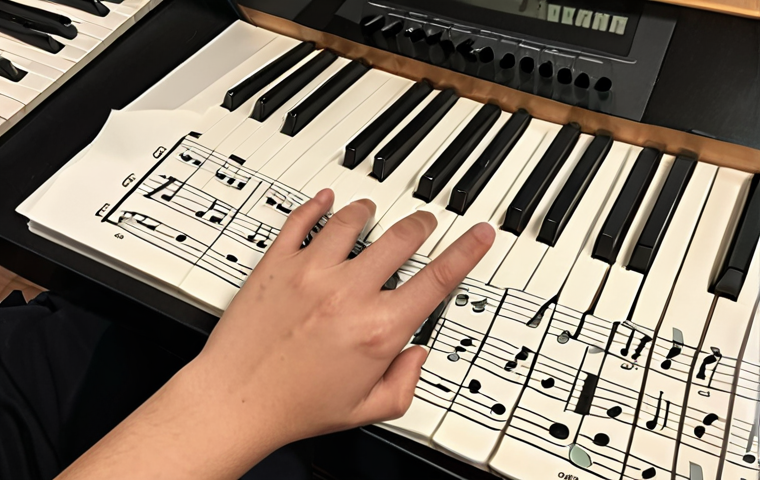
Chord progressions aren’t just abstract sequences; they’re the backbone of almost every song we love. Instead of just memorizing Roman numeral analysis, try to internalize the *sound* of each progression. I remember struggling with ii-V-I progressions until I started improvising over them. Suddenly, it wasn’t about theory anymore—it was about feel. And that’s what exam graders are increasingly looking for, that sense of musicality.
1. Recognizing Common Patterns
Spend time identifying common chord progressions in popular songs. Think about how the chords make you *feel*. Does the progression create tension, release, or a sense of resolution? For example, the I-V-vi-IV progression is incredibly common in pop music. Start by transcribing a few of your favorite tunes and analyzing their chord progressions. Then, try composing your own variations on these patterns. This active engagement will solidify your understanding far more effectively than simply reading about them.
2. Analyzing Chord Voicings
Don’t just focus on the root of each chord. Pay attention to the voicing—the specific arrangement of notes within the chord. A simple C major chord can sound drastically different depending on whether it’s in root position, first inversion, or second inversion. Experiment with different voicings to create different textures and colors. Also, consider the voice leading between chords. Smooth voice leading, where each note moves by a small interval, can make a progression sound much more elegant and sophisticated. I once spent an entire afternoon just experimenting with different voicings of a ii-V-I progression. It was tedious at times, but it dramatically improved my understanding of harmony.
3. Applying Theory to Real-World Scenarios
Imagine you’re given a melody and asked to harmonize it. This is where your understanding of chord progressions really comes into play. Think about the underlying harmony that would best support the melody. Consider the emotional impact you want to create. Are you going for a bright and cheerful sound, or something more melancholic and introspective? Also, don’t be afraid to break the rules. Sometimes the most interesting and innovative music comes from unexpected harmonic choices.
Tackling Rhythmic Dictation: More Than Just Notation
Rhythmic dictation can be a real stumbling block for many students. It’s not enough to just be able to notate rhythms; you need to *feel* them internally. Practice clapping, tapping, and singing rhythms until they become second nature. I found it helpful to use mnemonic devices to remember tricky rhythms. For example, I would associate a particular rhythmic pattern with a familiar phrase or word. The key is to find a system that works for you.
1. Subdivision is Key
Break down complex rhythms into smaller, more manageable units. Think about the underlying pulse and how each note relates to that pulse. Are you dealing with duplets, triplets, or syncopation? Understanding the subdivision will make it much easier to notate the rhythm accurately. Try practicing with a metronome, focusing on feeling the subdivisions within each beat.
2. Active Listening Techniques
Develop your active listening skills. Don’t just passively listen to the rhythm; actively try to internalize it. Imagine yourself performing the rhythm. Can you feel the accents and the silences? Try to identify any recurring rhythmic patterns. Also, be aware of the tempo. A rhythm that seems simple at a slow tempo can become much more challenging at a faster tempo.
3. Practice with Varied Examples
Expose yourself to a wide variety of rhythmic patterns. Don’t just stick to simple rhythms in 4/4 time. Explore different time signatures, syncopation, and polyrhythms. The more diverse your practice material, the better prepared you’ll be for anything the exam throws your way. I used to transcribe drum solos just to challenge myself rhythmically. It was incredibly difficult, but it really sharpened my ears.
Melodic Dictation Strategies: Singing Your Way to Success
Melodic dictation isn’t just about writing down notes; it’s about hearing the melody in your head and understanding its underlying structure. I always encourage my students to sing the melody back, even if they think they can’t sing. It helps them to internalize the intervals and the contour of the melody. The more you practice, the better you’ll become at identifying pitches and rhythms quickly and accurately. Trust me, it’s a skill that gets better with practice, but it can be frustrating at first.
1. Interval Recognition is Crucial
Master your intervals. Be able to identify any interval, both melodically and harmonically. Practice singing intervals until they become second nature. There are many online resources that can help you with interval training. I like to use apps that quiz me on intervals in a random order. It forces me to really listen and think about what I’m hearing.
2. Understanding Scales and Keys
Familiarize yourself with scales and keys. Knowing the key of a melody will help you to anticipate the notes that are likely to occur. Practice improvising melodies in different keys. This will help you to develop a strong sense of the tonal center. Also, be aware of any modulations or key changes within the melody.
3. Focus on Melodic Contour
Pay attention to the shape of the melody. Does it move mostly by step, or are there large leaps? Are there any recurring melodic patterns? Try to visualize the melody as a line on a graph. This can help you to identify the overall structure and direction of the melody. I often find it helpful to sketch out the melodic contour before I start notating the individual notes.
Harmony and Voice Leading: The Subtle Art of Chord Connections
Understanding harmony and voice leading is essential for any musician. It’s not just about knowing the rules; it’s about understanding why those rules exist. Good voice leading creates smooth and elegant connections between chords, while bad voice leading can sound jarring and awkward. I spent hours analyzing Bach chorales to learn the principles of good voice leading. It was a painstaking process, but it gave me a deep appreciation for the art of harmony. The key is to avoid parallel fifths and octaves.
1. Common Chord Progressions and Their Functions
Dive deep into the common chord progressions and their functions. Understand the role of each chord within the progression. How does each chord contribute to the overall harmonic direction? How does each chord create tension and release? For example, the dominant chord (V) typically creates tension and leads strongly to the tonic chord (I). Learn to recognize these patterns by ear.
2. Voice Leading Principles
Master the principles of voice leading: avoid parallel fifths and octaves, resolve leading tones properly, and aim for smooth melodic lines. The goal is to create a sense of coherence and flow between the individual voices. Think of each voice as a singer in a choir. Each singer should have a melodic line that is interesting and independent, but also harmonically compatible with the other voices. I remember one composition professor who always emphasized the importance of “singable” lines. If a line is difficult to sing, it’s probably not good voice leading.
3. Analyzing Existing Compositions
Analyze existing compositions to see how harmony and voice leading are used in practice. Choose pieces from a variety of genres and styles. Pay attention to the chord progressions, the voice leading, and the overall harmonic effect. Try to identify any instances where the composer breaks the rules of traditional harmony. Why did they make those choices? What effect do those choices create?
Figured Bass and Roman Numeral Analysis: Cracking the Code
Figured bass and Roman numeral analysis are two tools that musicians use to analyze and understand harmony. Figured bass is a shorthand notation that indicates the intervals above the bass note, while Roman numeral analysis uses Roman numerals to represent the chords in a key. Both of these tools can be incredibly useful for understanding the underlying structure of a piece of music. However, it’s important to remember that they are just tools. The goal is not to simply memorize the symbols, but to understand the underlying musical concepts. I always tell my students that figured bass and Roman numeral analysis are like learning a new language. It takes time and practice, but it’s well worth the effort.
1. Understanding Figured Bass Symbols
Deciphering figured bass symbols is like learning a new language. The symbols indicate the intervals above the bass note, providing clues about the chord’s inversion and any added notes. Common symbols include 5/3 (root position triad), 6/3 (first inversion triad), 6/4 (second inversion triad), and 7 (dominant seventh chord). Practice identifying these symbols in context and understanding their implications for the harmony. Don’t just memorize the symbols; try to understand *why* they are used. What does each symbol tell you about the sound of the chord? I find it helpful to play the chords on the piano while I’m analyzing the figured bass. It helps me to connect the symbols with the actual sound.
2. Applying Roman Numeral Analysis
Roman numeral analysis uses Roman numerals to represent the chords in a key. Uppercase Roman numerals represent major chords, while lowercase Roman numerals represent minor chords. Diminished chords are indicated with a “°” symbol, and augmented chords are indicated with a “+” symbol. For example, in the key of C major, the tonic chord (C major) is represented by I, the dominant chord (G major) is represented by V, and the subdominant chord (F major) is represented by IV. Learn to identify these chords in context and understand their functions within the key. Also, be aware of any borrowed chords or altered chords, which are chords that are not diatonic to the key.
3. Connecting Figured Bass and Roman Numerals
The beauty of figured bass and Roman numerals is that they complement each other. Figured bass provides specific information about the chord’s inversion and added notes, while Roman numerals provide a broader context within the key. Learning to connect these two systems will give you a deeper understanding of harmony. Imagine you’re analyzing a Bach chorale. You might start by identifying the figured bass symbols for each chord. Then, you would use Roman numeral analysis to determine the function of each chord within the key. Finally, you would analyze the voice leading to see how the chords are connected.
Form and Analysis: Seeing the Big Picture
Understanding musical form is crucial for analyzing and interpreting music. It’s about recognizing the different sections of a piece, how they relate to each other, and how they contribute to the overall structure. Whether it’s sonata form, rondo form, or theme and variations, each form has its own unique characteristics. Don’t just memorize the definitions; listen to examples and try to identify the different sections. That’s what really drove the lesson home for me.
1. Recognizing Common Forms
Learn to recognize common musical forms, such as sonata form, rondo form, theme and variations, and binary form. Each form has its own unique structure and characteristics. For example, sonata form typically consists of three main sections: exposition, development, and recapitulation. The exposition introduces the main themes, the development explores those themes in new ways, and the recapitulation restates the themes in the tonic key. Knowing these forms will help you to understand the overall structure of a piece of music.
2. Analyzing Melodic and Harmonic Structure
Analyze the melodic and harmonic structure of a piece of music. Pay attention to the themes, motifs, and chord progressions. How do these elements contribute to the overall form? Are there any recurring patterns or variations? For example, in a theme and variations, the theme is typically presented at the beginning of the piece, and then it is varied in different ways throughout the piece. The variations might involve changes in melody, harmony, rhythm, or texture.
3. Understanding the Emotional Impact
Consider the emotional impact of the form. How does the form contribute to the overall emotional effect of the piece? For example, sonata form is often used to create a sense of drama and conflict, while rondo form is often used to create a sense of playfulness and lightness. Think about how the different sections of the form create tension and release, and how they guide the listener through the musical journey.
Instrumentation and Orchestration: Colors and Textures
Instrumentation and orchestration are the art of choosing and combining instruments to create a desired sound. It’s about understanding the unique timbral qualities of each instrument and how they can be combined to create different textures and colors. A string quartet sounds vastly different from a brass ensemble, and a solo flute sounds vastly different from a full orchestra. Understanding these differences is essential for any composer or arranger. My first orchestration project was a disaster, but it taught me so much about the power of instrumentation.
1. Understanding Instrument Ranges and Characteristics
Each instrument has its own unique range, timbre, and characteristics. The flute, for example, is a high-pitched instrument with a bright and airy sound, while the tuba is a low-pitched instrument with a powerful and resonant sound. Understanding these characteristics is crucial for choosing the right instruments for a particular passage. Also, be aware of any limitations or challenges associated with each instrument. For example, the clarinet has a break in its range, which can make it difficult to play certain passages smoothly.
2. Combining Instruments Effectively
Think about how different instruments can be combined to create different textures and colors. A string quartet, for example, can create a wide range of textures, from delicate and intimate to powerful and dramatic. A brass ensemble can create a bright and fanfare-like sound, while a woodwind ensemble can create a mellow and pastoral sound. Experiment with different combinations of instruments to see what works best for your particular needs. Also, be aware of any potential clashes or conflicts between instruments. For example, two instruments that are playing in the same range can sometimes sound muddy or indistinct.
3. Analyzing Orchestral Scores
Analyze orchestral scores to see how instrumentation and orchestration are used in practice. Choose pieces from a variety of genres and styles. Pay attention to the way the composer uses different instruments to create different textures and colors. Try to identify any instances where the composer uses unusual or unexpected instrumentation. Why did they make those choices? What effect do those choices create? I often find it helpful to listen to the music while I’m studying the score. It helps me to connect the notation with the actual sound.
| Category | Key Areas | Skills Tested | Tips for Success |
|---|---|---|---|
| Rhythm | Time signatures, note values, rests, syncopation | Accurate transcription of rhythms, understanding of rhythmic patterns | Practice rhythmic dictation regularly, subdivide complex rhythms |
| Melody | Scales, intervals, melodic contour, key recognition | Identification of pitches, melodic patterns, and key centers | Sing the melody, focus on intervals, visualize the melodic contour |
| Harmony | Chord progressions, voice leading, Roman numeral analysis | Understanding of chord functions, smooth voice leading, harmonic analysis | Study common chord progressions, analyze voice leading in existing compositions |
| Form | Binary, ternary, rondo, sonata | Identifying sections, recognizing themes, understanding structure | Listen actively, follow the score, identify recurring patterns |
| Instrumentation | Instrument ranges, timbres, combinations | Recognizing instruments, understanding orchestral textures | Study orchestral scores, listen to a variety of music |
Wrapping Up
Mastering music theory is a journey, not a destination. It requires consistent practice, active listening, and a willingness to experiment. Don’t be afraid to make mistakes, and don’t get discouraged by setbacks. The more you immerse yourself in music, the more you’ll develop your musical ear and your understanding of theory. Remember to have fun, and let your passion for music guide you.
Handy Information
1. Online Ear Training Apps: Websites and apps like Teoria and Functional Ear Trainer can help you improve your interval recognition, chord identification, and melodic dictation skills.
2. Music Theory Textbooks: “The Complete Idiot’s Guide to Music Theory” is an approachable resource.
3. YouTube Channels: Channels like “8-bit Music Theory” and “Rick Beato” offer engaging explanations of music theory concepts.
4. Local Music Schools and Teachers: Taking lessons from a qualified music teacher can provide personalized guidance and feedback.
5. Practice Consistently: Dedicate even a small amount of time each day to practicing music theory. Consistent practice is more effective than sporadic cramming.
Key Takeaways
Consistent practice is crucial. Active listening is essential. Don’t be afraid to experiment. Find resources that work for you. Enjoy the process of learning.
Frequently Asked Questions (FAQ) 📖
Q: What’s the single most effective way to prepare for the music theory exam based on past papers?
A: Honestly, just passively reading the answers won’t cut it. The most effective strategy? Treat each past paper like a real exam.
Time yourself, stick to the rules, and then, critically, analyze your mistakes. Don’t just look at the right answer – figure out why you got it wrong.
Did you misinterpret the question? Did you forget a specific rule? This targeted analysis is where the real learning happens.
Think of it like detective work – you’re hunting down the gaps in your knowledge. Plus, simulating the actual exam environment helps manage those pesky nerves.
Q: Are there specific areas in music theory that tend to pop up more frequently in exams? Which ones should I prioritize when studying past papers?
A: Absolutely. While every area of music theory is important, certain concepts are exam favorites. For instance, expect a heavy dose of harmonic analysis – figuring out chord progressions, identifying cadences, and understanding key modulations.
Rhythmic dictation and melodic dictation are almost always present, testing your ability to transcribe what you hear. Also, be ready to construct scales, identify intervals, and understand common forms like sonata form or rondo form.
Past papers will quickly reveal these recurring themes. Focus on mastering those core concepts first, then branch out to the less common areas. I recall spending hours on dominant 7th chords back in the day – worth every minute!
Q: Besides just finding the correct answers, what else can I learn from studying past music theory exams?
A: Beyond just right and wrong answers, past papers are like a window into the examiner’s mind! They reveal the style of questioning – are they more focused on practical application or rote memorization?
Do they favor certain composers or musical periods? Paying attention to these subtle cues can give you a massive advantage. Plus, studying past papers helps you develop exam-taking strategies.
You’ll learn to manage your time effectively, prioritize questions, and avoid common pitfalls. It’s not just about knowing the theory; it’s about knowing how to apply that theory under pressure.
I remember discovering a pattern in how they phrased modulation questions – changed my whole approach!
📚 References
Wikipedia Encyclopedia
구글 검색 결과
구글 검색 결과
구글 검색 결과
구글 검색 결과
구글 검색 결과